Photo Credit: Sci Fi Ion Hotel, Iceland
The Epic Stays Mentoring Clinics were implemented across five partner countries — Iceland, Italy, the Netherlands, Slovenia, and Ireland — each adapting the four-session model to reflect their local tourism landscape, business maturity levels, and regional priorities.
While the structure remained consistent — module input, mentor discussion, peer exchange, and action commitments — the emphasis and practical case examples differed based on country context. These clinics demonstrate that the Epic Stays mentoring model is transferable, adaptable, and scalable across diverse tourism environments.
Across all partner countries, the mentoring clinics consistently achieved:
Most importantly, the clinics demonstrated that structured mentoring accelerates action when combined with practical tools and real-world discussion.
Across Europe, the Epic Stays Mentoring Clinics were designed with one simple purpose:
To help tourism entrepreneurs move from ideas to action.
These clinics were not designed to be lectures. They were practical, relevant, honest conversations grounded in real business experience — helping rural and alternative accommodation providers apply the Epic Stays modules and case studies to their own context.
Now, the full structure is available so that you can run your own mentoring clinic — in your region, with your network, in your own style.
The clinics help people go from “interesting content” to “how do I develop my own ‘Epic Stay’?” to “what am I doing next week?”
• Rural tourism entrepreneurs
• Alternative accommodation providers
• Mentors and consultants
• Tourism educators
• Local Enterprise Offices
• Rural development organisations
• Tourism networks
• Destination Development Agencies
If you support small tourism businesses — this is for you.
If you are building your own Epic Stay — this is for you.
Key themes that emerged across partner countries:
These discussions led to tangible learning and implementation across tourism businesses, destinations, and educational programs.
Start with the fully worked Irish example to see how a mentoring session is structured and delivered in practice. Download the Mentor’s Delivery Guide to understand timing, flow, and facilitation tips.
Get all four structured packs designed to guide entrepreneurs from initial idea to long-term viability. Each pack includes a ready-made framework, presentations, learning materials, and practical discussion prompts to help you deliver each session clearly and confidently.
Download and use the editable templates to adapt the content structure, and materials to suit your local context, audience, or delivery style.
Explore insights and examples from mentoring clinics delivered across Europe to see how the model works in different tourism environments.
Before you begin, we strongly recommend reading the Mentor’s Delivery Guide.
It provides a fully worked example of four mentoring sessions from the Irish context — showing tone, structure, discussion flow, challenges raised, and outcomes achieved.
The Delivery Guide shows
Reading this first will give you the clarity and confidence before designing your own mentoring clinics. It shows you what this looks like in real life.
‘I can highly recommend Epic Stays Mentorship. The presenters were very informative, delivering each session in a very professional and enjoyable way. The presentation slides were excellent and made available for participants to use at a later time. I learned so much from the mentorship, and it has given me much valuable information to help me improve and develop my business’.
Irish Epic Stays Participant, County Donegal, Ireland
‘A heartfelt thank you to you Laura and Lorcan for running this course. The information, guidance, experience and knowledge shared in these modules will save me a lot of time and answer a lot of the questions on my mind’.
Irish Epic Stays Participant, County Leitrim, Ireland
‘Many thanks for the very useful mentoring for Epic Stays and the generous advice given by Laura and Lorcan from Crusader Cabins. Useful technology, learning from others' mistakes and some fantastic innovative ideas were the key takeaways. I look forward to using all the practical tips shared in planning our Epic Stay in Co. Cavan’.
Irish Epic Stays Participant, County Cavan, Ireland
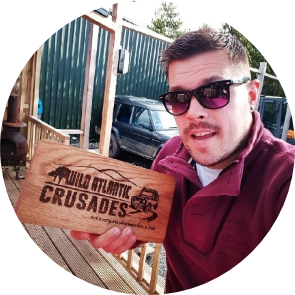
Lorcan shared real lessons — used his mistakes — grounded in practical rural tourism delivery.
Lorcan is a rural tourism accommodation innovator and sustainable cabin designer who founded Crusader Cabins, Leitrim– an award-winning micro-accommodation enterprise in Ireland’s northwest.
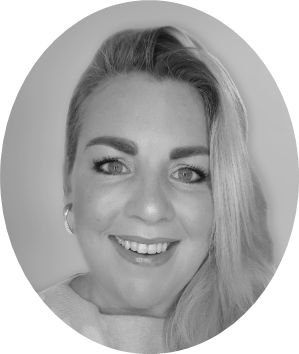
Laura focused on providing the Epic Stays content to bridge theory and implementation.
Laura is the Irish Epic Stays partner with a background in all aspects of tourism, rural SME development and education program design. Laura brought a strategic, practical and systems-focused lens to the clinics.
Before designing your own clinics, download and explore ready-made delivery frameworks and session content. The Epic Stays 4 Mentoring Packs each contain presentations, learning materials, case studies, exercises, and structured discussion prompts. See how the sessions were organised, how mentors added practical value, and how participants progressed from discussion to clear action steps.
Session 1: “Where You’re At & What You’re Actually Selling”
Session 2: “Setting Up & Launching Smart – Planning and the “Wow” Factor”
Session 3: “Marketing & Digital Tools for Guest Experience”
Session 4: “Bringing It All Together – Refinement, Viability & Next Steps”
Download and use the editable templates to create your own mentoring sessions.
This is where you get a blank canvas, starting with a clear and simple structure — the same framework used across all sessions — making it easy to prepare, deliver, and reuse. Adapt the content, examples, and materials to suit your local context, audience, and mentoring style.
Part 1: Main Learning Material (LEARN)
This is the foundation of the session. Participants explore the key ideas and core Epic Stays content linked to that theme.
Part 2: Mentor Discussion (DISCUSS)
Real-world insights, practical examples, open questions, and shared problem-solving bring the content to life.
Part 3: Key Takeaways & Exercises (EXPLORE)
Participants apply the learning to their own business, reflect on the key insights, and define at least one concrete next action.
Part 4: Additional Support Resources (ACTION)
Useful links, tools, templates, and practical checklists to help participants take action after the session.
Explore insights and examples from mentoring clinics delivered across Europe to see how the model works in different tourism environments. Each country adapted the model to its own tourism destination reality. Different contexts. Same structure. Strong impact.
Iceland: In Iceland, mentoring discussions focused heavily on experience differentiation and sustainability positioning within a competitive tourism market. Participants explored how to move beyond accommodation features and instead build strong emotional narratives rooted in landscape, heritage, and environmental responsibility. The sessions reinforced the importance of aligning storytelling with authentic local identity — particularly in a market where nature is a central asset.
Italy: Italian clinics placed strong emphasis on heritage integration, experiential value, and financial literacy. Discussions explored how traditional properties and cultural assets could be transformed into immersive guest experiences while maintaining authenticity. Pricing strategy and cost awareness were key themes, helping SMEs understand the full economic picture of alternative accommodation models.
The Netherlands: In the Netherlands, the focus leaned toward structured business planning and digital operational efficiency. Participants engaged with tools such as the Pitch Deck, digital management systems, and Property Management Systems (PMS). There was particular attention on refining market positioning and improving operational clarity to support scalable and sustainable growth.
Slovenia: Slovenian clinics emphasised sustainable tourism integration and regional collaboration. Sessions explored how small accommodation providers can embed sustainability practices meaningfully — not as marketing add-ons, but as operational principles. Partnerships and community integration featured strongly as mechanisms for strengthening guest experience and destination resilience.
Ireland: Ireland’s clinics combined real-world rural experience with structured module delivery. The sessions were highly conversational, grounded in practical challenges such as planning permission, budgeting realities, guest differentiation, and marketing systems. A balance of lived entrepreneurial experience and structured curriculum application helped participants move from idea to action within four weeks.
Adapt it to your region – your local challenges – your tourism profile or – your funding context.
Note Epic Stays is licensed under CC BY-SA 4.0, meaning you can reuse and adapt the materials (with attribution). We encourage you to build on this work, localise it, strengthen it, and keep it practical. Because small tourism businesses don’t need more theory.
They need structure.
They need clarity.
They need conversation.
They need next steps.
And that’s exactly what these mentoring clinics are designed to deliver.
 English (UK) English (UK)
  Slovenščina
  Íslenska
  Italiano
  Nederlands English (UK) English (UK) Slovenščina
Íslenska
Italiano
Nederlands
Nederlands English (UK) English (UK) Slovenščina
Íslenska
Italiano
Nederlands